The Array
A combat FPS level built in Unreal Engine 5, taken from greybox to final art across two production milestones.
What I did
- Designed and built a single-player combat FPS level inside a production framework, from greybox blockout to final art pass, across Alpha and Beta milestones.
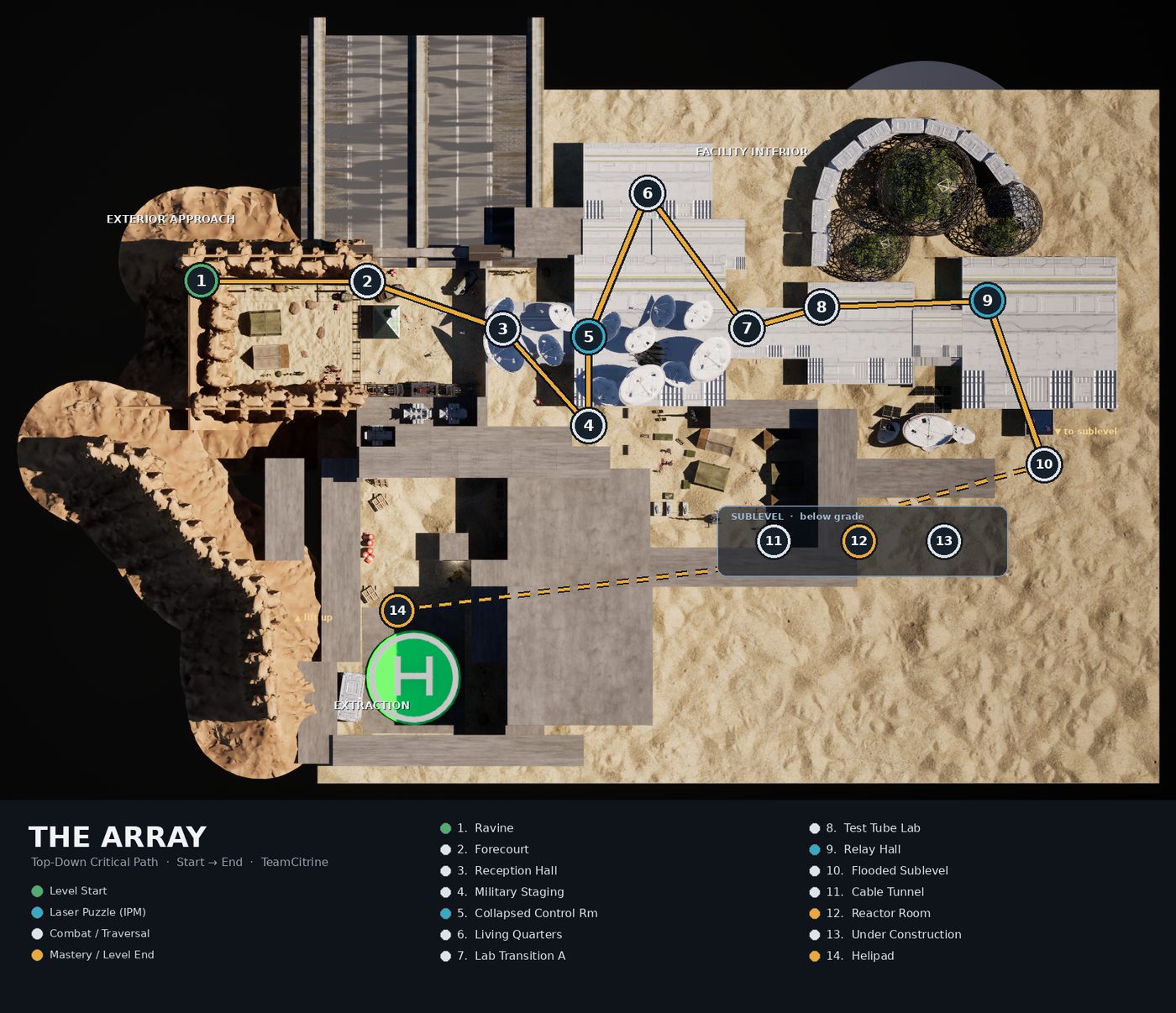
- Authored the full level design document and a critical path through fourteen named beats, from the exterior Ravine down to the Helipad extraction.
- Introduced the level's laser-routing puzzle in isolation first, let the player practice it, then combined it with combat and traversal toward a mastery finale.
- Implemented the supporting systems in Blueprint: a Niagara laser beam with collision and trace, a floor-aware elevator call-button setup, and the vault-door sequence with audio.
- Folded a 66-item feedback pass from Alpha into the Beta build.
The level
The Array is a combat level in the post-Fall Scraps world. The player crosses a desert ravine and an exterior substation, pushes through the facility interior, drops into a flooded sublevel, and fights out to a helipad extraction. The spine of the level is a laser-routing puzzle: the level teaches it clean, lets you get comfortable, then asks you to use it under pressure.
Critical path
Blockout to final
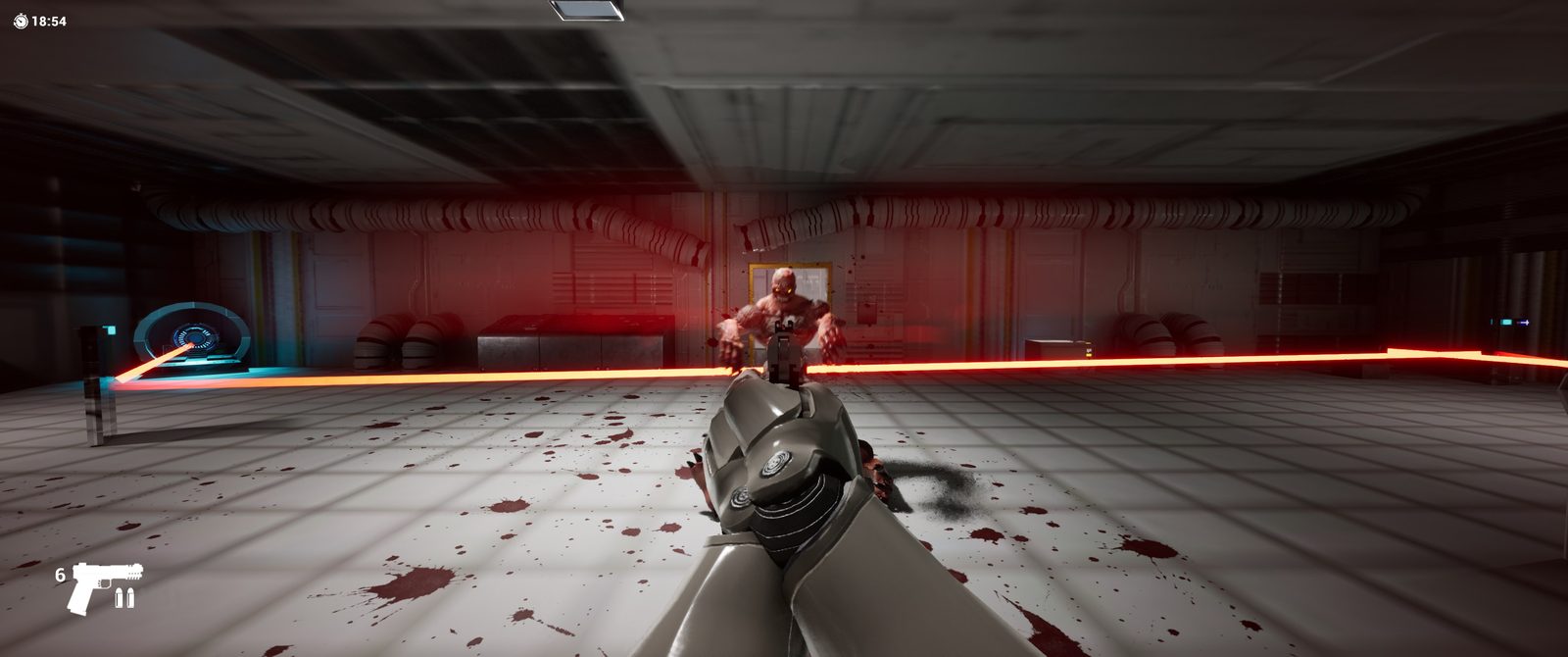
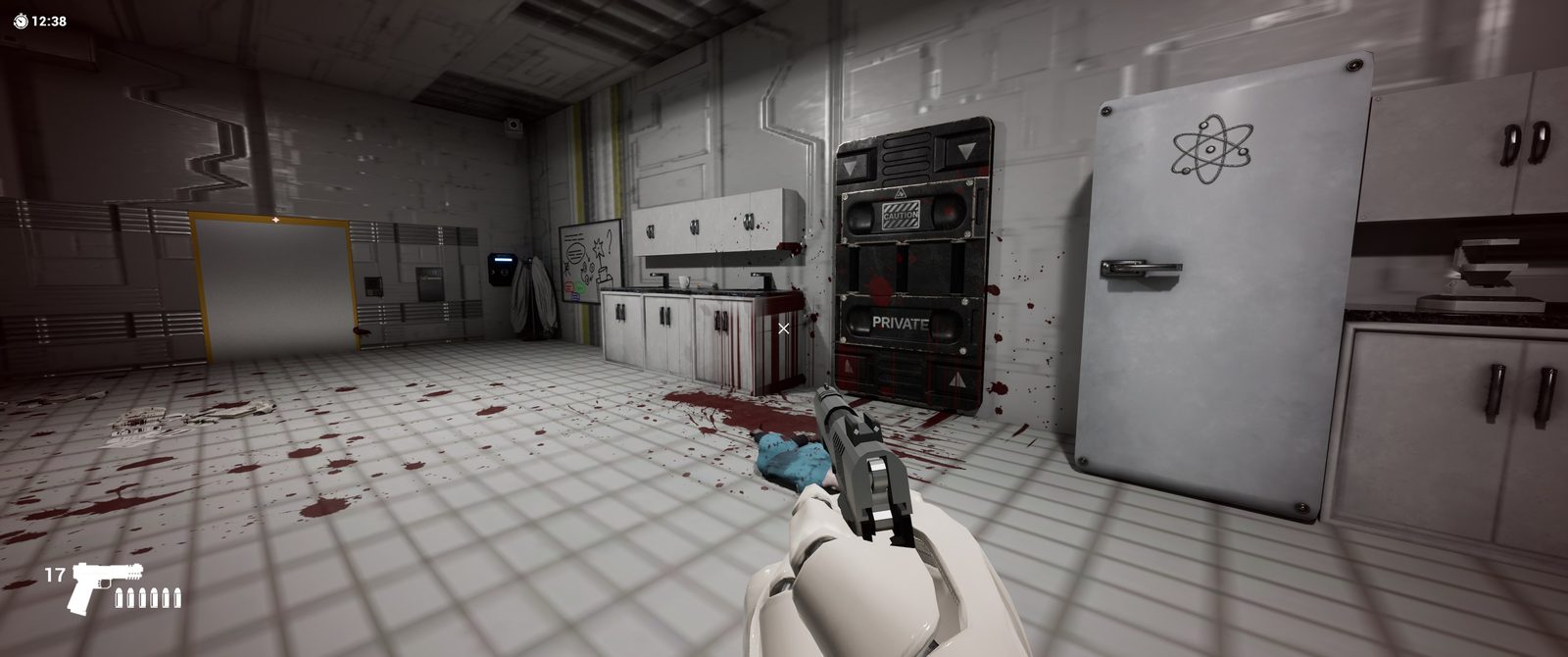
Fifteen frames along the critical path. Tap or click any image to swap between the final art pass and the original blockmesh.
Overview
What changed between Alpha and Beta
Alpha came back with a long feedback pass. The most useful notes were the ones that exposed where players broke the level instead of playing it. I restructured the opening so the first beats read in the intended order, closed a mirror exploit that let players skip part of the laser puzzle, and tightened the door and fuse event chains so the sequence could not fire out of order.
The lesson I am taking forward is that a level is not done when it works, it is done when players stop finding the seams. The blockout-to-final pairs above are the visible half of that, but the bigger work was in the systems underneath, making the level hold together no matter how someone tries to play it.